TYSONS OFFICE

How to Create an S Corporation in California: A Step-by-Step Guide (2026)
Jennifer Kim Nguyen
August 29, 2026
Bottom line up front: Here’s how to create an S corporation in California, in one line: form a corporation or LLC, then elect S-corp tax status with the IRS.
Many business owners are surprised to learn that there’s no such thing as “filing for an S corporation.” Rather, S-corporation status is a tax election you add to a business you’ve already formed. Below, I’ll walk through exactly how to create an S corporation in California, what it costs, and how to know if it’s the right move for you.
The Tax Implications of Setting Up An S Corporation in California
Before we go any further, it’s important to understand what electing S-corp status actually accomplishes. When you’re a sole proprietor or a standard LLC, you owe income tax and self-employment tax (generally 15%) on every dollar of profit you make. With an S election, though, you can split your pay into a reasonable salary and distributions. In that scenario, the self-employment tax applies only to the salary but not to the distributions. Though you still pay income tax on both, self-employment tax does not apply to the distributions, which means less taxes overall for you.
The one caveat to remember is that California charges its own tax on S corporations that reduces part of that benefit. So the next logical step is to understand which California businesses can actually benefit from S Corporation status.
Does an S Corporation Make Sense for You?

An S corp isn’t the right fit for every business. So, before we get into how to elect the status, it’s worth pausing to consider two factors.
The first has to do with eligibility. To elect S-corp status, your business generally needs to be a domestic corporation or LLC with no more than 100 shareholders, all of whom are U.S. citizens or residents. Your business is restricted to one class of stock. Partnerships and trusts do not qualify for S corp status because the status is really meant for individual people. Most small businesses will meet these criteria, but it’s worth a quick check before you move on.
The second factor is cost, and it’s specific to California. Electing S-corp status comes with expenses a sole proprietor or ordinary LLC doesn’t have. First, California charges S corporations a franchise tax of 1.5% of net income, or $800, whichever is greater. Second, an S corp has to run payroll to pay you a formal salary, which usually means paying a payroll service or accountant to handle the paychecks and filings. Because you’re spending money to unlock the tax savings, the strategy only pays off once your profit is high enough that the savings outweigh those added costs. Finding that break-even point for your specific numbers is worth evaluating with a CPA ahead of time.
If you’ve considered these factors and the numbers make sense, here’s how to create your S corporation in California, step by step.
How to Become an S Corporation in California
Once you’ve decided it’s the right move, here’s the process from start to running a business:
- First, create the business itself. First, you create the actual business. Most people incorporate by filing Articles of Incorporation (Form ARTS-GS) online through the Secretary of State’s BizFile Online system for $100, but you can also form an LLC and elect S-corp treatment instead. The two are taxed a bit differently, so it’s worth getting advice from a business tax lawyer on which fits your goals.
- Create the governing documents. Without these, there is a danger of a lack of personal separation between you and the business. Bylaws (or operating agreements for an LLC), written consents, and resolutions are important to establish the legal separate character and rules of your business. A business tax lawyer can help ensure you have the best legal grounding and processes possible for liability protection and risk mitigation.
- File your initial Statement of Information. This form keeps the state’s record of your business current, and you’ve got 90 days from incorporating to file your first one with the Secretary of State (Form SI-550). Keep in mind that corporations file it annually, whereas LLCs only refile every two years.
- Confirm you meet the S-corp eligibility rules. Revisit the requirements we covered regarding who can own the business, the U.S. citizen-or-resident rule, and having just one class of stock to be sure you qualify before electing. An election made when you don’t qualify can mean back taxes and amended filings to clean up, so it’s worth confirming before you elect.
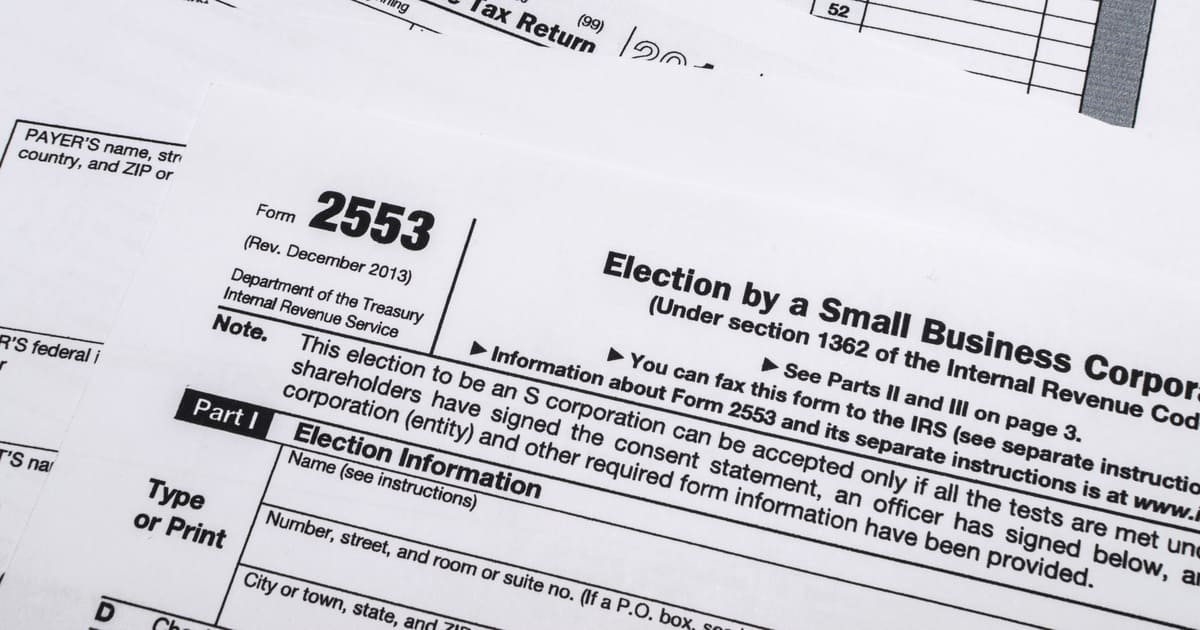
- File IRS Form 2553 to make the election. This is the actual S-corp election, filed with the IRS, and there are important deadlines to keep in mind. Form 2553 generally has to be filed within roughly two and a half months of forming (or of your tax year starting). File late and your S status may not kick in until next year, although the IRS does offer relief for missed deadlines in certain cases.
- File Form 100S and pay the franchise tax. California accepts your federal S election automatically, so there’s no separate state election to file. What you do owe is California’s annual S-corporation return via Form 100S plus the state’s franchise tax: 1.5% of your net income or $800, whichever is greater. The good news is that a newly formed corporation is exempt from the $800 minimum its first year, though the 1.5% still applies to any first-year profit.
- Set up payroll and pay yourself a reasonable salary. As an owner who also works in the business, you have to pay yourself a “reasonable” W-2 salary before you take any distributions. Lowball that salary to avoid payroll taxes, and the IRS can reclassify your distributions as wages and tack on penalties. What the IRS deems “reasonable” depends on your role, your industry, and what the business earns.
- Stay compliant year to year. Life as a California S corp comes with recurring homework: file Form 100S by the 15th day of the third month after your year ends (March 15 for calendar-year filers), make quarterly estimated payments, file your annual Statement of Information, run payroll properly, and follow corporate formalities. Let these slip, and penalties or even suspension can follow.
Though these steps are well-documented, the process can be confusing and even overwhelming when you are setting up a small business. Here are the common questions many people have.
Frequently Asked Questions
Does California recognize the federal S-corp election?
Yes. California generally honors your federal S election automatically, so there’s no separate state election to file. But you still file California Form 100S every year and pay the state’s S-corporation franchise tax.
How much does an S corporation cost in California?
State costs include the $100 Articles of Incorporation filing fee and a $25 Statement of Information fee. On the tax side, California charges S corps the greater of 1.5% of net income or an $800 minimum each year — though a newly formed corporation is exempt from the $800 minimum in its first year.
Is an S corporation worth it in California?
It depends on your income. Because California charges a 1.5% franchise tax on top of payroll costs, the S corp’s savings only kick in above a certain profit level. A tax professional can help you analyze the numbers and whether or not S corp election is right for you.
Do I need a lawyer to set up an S corporation in California?
You may draft and file the paperwork yourself. However, this could lead to problems. Where an attorney can be absolutely vital is in helping you decide whether an S corp saves you money in California, choosing the right underlying entity, creating the correct documents, and keeping the election and formalities compliant from the start.
What’s the difference between a C corp and an S corp?
They’re the same type of entity taxed in two different ways. A C corp pays corporate tax on its profits, and owners pay tax again on dividends. There’s no limit on ownership or investment.
An S corp is a C corp that elected Subchapter S tax treatment, so profits are taxed just once on the owners’ returns instead of twice. The trade-off is stricter rules: up to 100 owners, all U.S. individuals, and one class of stock.
How a Business Tax Attorney Can Help

At Gammon & Grange, helping business owners choose and set up the right structure is part of what we do all the time. If you’re deciding whether an S corporation makes sense in California or you want to be sure your election, salary, and compliance are set up to actually save you money, I’d love to help. The filing is the simple part, but the judgment calls around it are what can make or break a strategy. If you want help weighing those calls, reach out to me, Jennifer Kim Nguyen.
This post provides general information about creating an S corporation in California and is for informational purposes only. Fees, tax rates, and rules change, and every business is different. This is not legal or tax advice and does not create an attorney-client relationship. Please consult a qualified professional about your specific circumstances.
Share this Article:




Get A Free Consultation
Get a Consultation With a Nationally Recognized Nonprofit And Small Business Lawyer Today.