TYSONS OFFICE

LLC Tax in CA: What You Owe and When It’s Due
Jennifer Kim Nguyen
July 31, 2026
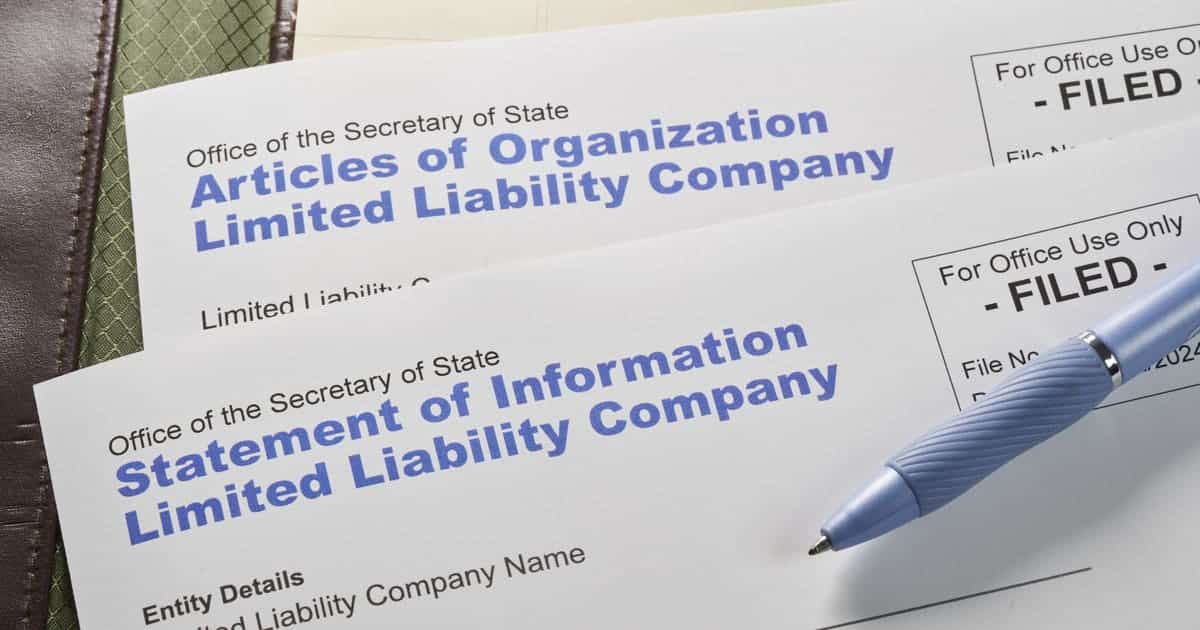
Quick answer: LLC tax in CA has two parts. Every California LLC pays an $800 annual tax, due April 15. On top of that, LLCs with $250,000 or more in California income owe an extra fee that runs from $900 to $11,790, depending on total income.
LLC tax in CA catches a lot of business owners off guard, mostly because it isn’t a single tax. It’s two separate charges, each with its own rules, amounts, and due dates, and missing either one can mean penalties or even a suspended LLC.
Here’s how California LLC tax actually works, in plain terms, plus every due date worth putting on your calendar.
The Two Parts of California LLC Tax
Here’s what trips people up: CA LLC tax isn’t one payment; it’s two. Understanding each part makes the whole system a lot less intimidating.
- The $800 annual tax: Everyone pays it, every year, regardless of how much the LLC earns or whether it did anything at all.
- The LLC fee: This fee only kicks in once your California income hits $250,000, and grows as your income does.
So the $800 applies to everyone, while the LLC fee only impacts higher earners. Here’s how each part works.
The $800 Annual LLC Tax in CA
This is the one nobody escapes. Every LLC that’s registered with the California Secretary of State or doing business in California owes an $800 annual tax, whether it turned a profit, broke even, sat idle, or lost money all year. According to the State of California Franchise Tax Board, Out-of-state LLCs doing business in California owe it too.
A couple of things that trip people up:
- There’s no first-year break anymore. From 2021 through 2023, California waived the $800 for a new LLC’s first year. That waiver has expired, so any LLC formed in 2024 or later owes the $800 for its very first year.
- It has nothing to do with income. The $800 is a flat “privilege” tax for the right to do business in California. Earning zero doesn’t get you out of it.
You pay it with Form 3522 (the LLC Tax Voucher), or online through the Franchise Tax Board’s Web Pay.
Now that you understand the $800 annual tax, let’s dive into the particulars of the LLC fee.
The LLC Fee (If You Earn $250,000 or More)
Once your LLC’s California income reaches $250,000, you’ll owe a second amount on top of the $800. California calls it the “LLC fee,” and it scales with your income:
| California Total Income | LLC fee |
| Under $250,000 | $0 |
| $250,000 to $499,999 | $900 |
| $500,000 to $999,999 | $2,500 |
| $1,000,000 to $4,999,999 | $6,000 |
| $5,000,000 or more | $11,790 |
Source: California Franchise Tax Board. These tiers have been unchanged since 2001, but you can confirm the current amounts on the FTB’s LLC filing information page.
Here’s the part that surprises people: this fee is based on your total income, not your profit. So an LLC with $600,000 in sales but a thin profit margin, or even a loss for the year, still owes the $2,500.
Here’s a real-life example to illustrate: a mid-sized California LLC with, say, $3 million in income would pay the $6,000 fee plus the $800 tax for a total of $6,800 a year to the state before any personal income tax.
Before you budget for any of this, it’s worth confirming that California LLC tax applies to you at all.
How to Determine if California LLC Tax Applies to You

Two things put an LLC on the hook: being registered with the California Secretary of State, or “doing business” in California. That second phrase is broader than most people expect, and it catches a lot of out-of-state and online sellers off guard.
In general, California treats you as doing business if your California sales, property, or payroll cross certain thresholds. In 2025, that was $757,070 in sales, or $75,707 in property or payroll (or 25% of your company-wide totals, whichever is less). These amounts adjust for inflation each year.
Don’t assume that staying under the thresholds keeps you off the hook. California has recently pushed back hard on that idea. In a 2025 ruling, an out-of-state LLC owed the $800 simply for storing inventory in a California Amazon warehouse, even though its sales, property, and payroll were all below the limits. Having one remote worker in California can trigger the tax just as easily.
The practical takeaway: if you’re selling into California, holding inventory or property there, or have anyone working there, assume California’s LLC tax applies, the $800 at minimum and the income-based fee if you earn enough, and confirm before deciding it doesn’t.
Once you’ve confirmed you owe, the rest comes down to paying on time.
CA LLC Tax Due Dates

The two charges aren’t due at the same time, and first-year timing has its own quirks, which is how a lot of business owners rack up penalties. Here are the key California LLC tax due dates for a calendar-year LLC:
- $800 annual tax: April 15. This one catches people off guard because it’s due for the year you’re currently in, not the year that just ended. Your $800 for 2026, for example, is due April 15, 2026, while that year is still underway. (Formally, it’s the 15th day of the 4th month of your tax year.) Pay it with Form 3522.
- LLC fee estimate: June 15. If you expect $250,000 or more in California income, you have to estimate and prepay the fee by the 15th day of the 6th month, using Form 3536. Underestimate it, and California charges a 10% penalty on whatever you underpaid.
- Form 568 (your annual LLC return): April 15. After the year ends, you file Form 568 to report it and settle up the fee, matching what you prepaid in June against what you actually owed. You can get an automatic extension to file until October 15, but that only delays the paperwork; any balance you owe is still due April 15.
First-year timing works differently. Your very first $800 isn’t due the following April, it’s due the 15th day of the 4th month after you form (so an LLC formed in September owes it by mid-December). That means, if you form your LLC late in the year, say November, you can end up paying $800 for that first year in February and another $800 in April.
If you miss these due dates, California adds penalties and interest and can eventually suspend your LLC, which strips it of its right to operate and even to defend itself in court. Setting a couple of calendar reminders is a great idea.
Frequently Asked Questions
Do I have to pay the $800 if my LLC made no money?
Yes. The $800 annual tax applies whether your LLC earned a profit, lost money, or had no activity at all. The only way to stop owing it going forward is to formally cancel the LLC with the state. However, your LLC may not have to pay federal and state income taxes.
Is the LLC fee based on profit or revenue?
Revenue. The fee is calculated on your total California income, not net profit, so an LLC can owe the fee even in a year it loses money.
Do out-of-state LLCs have to pay California’s $800 tax?
Often, yes. If your LLC is registered in California or “doing business” here, it owes the $800, and California defines doing business broadly. Out-of-state LLCs with California sales, inventory, property, or remote employees can be on the hook even if they fall below the state’s dollar thresholds.
Do these taxes apply to PCs?
The $800 does; the LLC fee doesn’t. A professional corporation owes the same $800 minimum franchise tax as other California corporations, so that part carries over. But the income-based LLC fee is specific to LLCs, and a PC doesn’t pay it. Instead, a PC is taxed as a corporation on its net income (or can elect S-corp treatment), which is a different system. If you’re a licensed professional, read What is a Professional Corporation?
Does California still waive the first-year $800?
No. That waiver applied only to LLCs formed between 2021 and 2023. LLCs formed in 2024 or later owe the $800 for their first year.
Are California LLC taxes and fees tax-deductible?
Generally, yes, on your federal return. The $800 annual tax and the LLC fee both count as ordinary business expenses you can write off federally. The catch is that California doesn’t let you deduct them against your state income the same way, so the benefit is smaller than it looks. Consult with a tax attorney to learn more about the impact.
Have More Questions? Let’s Talk
California’s LLC rules can feel complicated, and the penalties for a missed deadline or an incorrect income estimate add up fast. As a Gammon & Grange tax attorney licensed in California, I help business owners figure out what they’ll actually owe, stay ahead of filings like the annual tax and Form 568, and decide whether an LLC, a professional corporation, or an S-corp election is the smartest setup. For clarity on your situation, reach me through my profile or at (619) 787-8283.
This article is intended for general informational purposes only and does not constitute legal, tax, or financial advice. Reading this post does not create an attorney-client relationship. Tax rules change, and every situation is unique. Please consult a qualified attorney or tax professional about your specific circumstances.
Share this Article:



Get A Free Consultation
Get a Consultation With a Nationally Recognized Nonprofit And Small Business Lawyer Today.